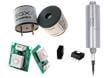

PS1-NO2-2-MOD

Amphenol SGX Sensortech
523-PS1NO22MOD
PS1-NO2-2-MOD

Mfr.:

Paglalarawan:
Multiple Function Sensor Modules PS1 Series Solid Polymer Gas Sensor Module Nitrogen Dioxide 2ppm - UART

ECAD Model:
I-download ang libreng Library Loader para i-convert ang file na ito para sa iyong ECAD Tool. Matuto nang higit pa tungkol sa ECAD Model.

May Stock: 1

Stock:
1 Maaaring Ipadala Agad
Lead-Time ng Pabrika:
7 (na) Linggo Tinatayang oras ng paggawa sa pabrika para sa mga bilang na mas marami kaysa ipinakita.
Minimum: 1   Mga Multiple: 1
Presyo ng Unit:
₱-.--
Ext. Presyo:
₱-.--
Est. Taripa:
LIBRENG Ipapadala ang Produktong Ito

Presyo (PHP)

Dami Presyo ng Unit
Ext. Presyo
₱14,457.66 ₱14,457.66
₱13,687.42 ₱136,874.20
₱13,497.18 ₱337,429.50
₱13,386.98 ₱669,349.00
100 Quote

Katangian ng Produkto Value ng Attribute Pumili ng Attribute
Amphenol
Kategorya ng Produkto: Mga Module ng Multiple Function Sensor
RoHS:  
Brand: Amphenol SGX Sensortech
Uri ng Produkto: Multiple Function Sensor Modules
Dami ng Pack ng Pabrika: 1
Subcategory: Sensor Modules
Nahanap na mga produkto:
Para maipakita ang mga katulad na produkto, pumili ng kahit na isang checkbox man lang
Pumili ng kahit isang checkbox sa itaas para magpakita ng katulad na produkto sa kategoryang ito.
Mga Piniling Attribute: 0

CAHTS:
9027100010
USHTS:
9027102000
JPHTS:
902710000
KRHTS:
9027100000
MXHTS:
9027100100
BRHTS:
90271000
ECCN:
EAR99

Solid Polymer Electrochemical Gas Sensors

Amphenol SGX Sensortech Solid Polymer Electrochemical Gas Sensors are designed to detect a wide range of gases, including carbon monoxide, chlorine, and volatile organic compounds (VOCs), as well as humidity and particulates. These sensors are based on the principle of electrochemical catalytic reaction. The sensor responds to the target gas and delivers a very small current proportional to the gas concentration. The series utilizes a dry core design featuring three electrodes in contact with the solid electrochemical material. A typical electrode consists of a surface area of precious metal and other materials. The electrode, electrochemical cell, and surrounding air are in contact, allowing the gas to diffuse through the porous membrane into the sensor's working electrode. At this working electrode, the gas is oxidized or reduced.