




ams OSRAM Factory Automation Solutions

ams OSRAM Factory Automation Solutions use smart light and sensor solutions to guarantee functional safety in an open work environment and improve efficiency and product quality within modern manufacturing processes. ams OSRAM offers a comprehensive portfolio of optical solutions that enable our customers to improve production processes.
Applications
- Factory automation, robotics, and Industry 5.0
- Sensors for robotics, Internet of Things (IoT), Artificial Intelligence (AI), and Machine Learning (ML)
- Autonomous Guided Vehicles (AGV) and warehouse robots
- Collaborative robots (cobot) for human interaction
- Medical robots
- Consumer robots
- Industrial controls [knobs, potentiometers, stepper motors, and Brushless DC motors (BLDC)]
- Machine vision (image sensors and illuminators) for factory inspection and automation
Machine Vision
ams OSRAM optical solutions for machine vision enable machines to see the world precisely. Machine vision encompasses a wide range of applications. Examples of automatic optical inspection for quality control essential for achieving the desired image quality include a matching combination of imager resolution, frames per second image sampling speeds, line/2D scene scanning, global/rolling shutter technology, and matching-scene illumination. If the scene illumination is complementary to normal daylight, then spectrally adaptive illumination controlled by a sensor might be required. ams OSRAM offers a broad selection of leading-edge product solutions addressing the need for different machine-vision applications and use cases. Near-infrared illumination, with flood and high-contrast dot illuminators, combined with sensitive NIR image sensors, enables compact, cost-effective, and high-performance vision systems immune to ambient illumination conditions outside user control.
3D Sensing
Structured light, passive/active stereovision, integrated Time of Flight, direct Time of Flight, or intensity proximity? A wide range of optical sensing techniques exist to sense distance and capture 3D scenes, and all have different trade-offs. ams OSRAM enables designers to choose and implement the solution that matches the application through a comprehensive portfolio of illuminators, sensors, and drivers.
3D sensing enables the machine to accurately identify the objects it needs to work on within its specific environment. Vision-based 3D sensing solutions are typically realized using dual camera setups for stereovision or single camera combined with defined pattern projection setups for structured light vision setups. If structured light projection is combined with stereovision for even higher 3D scanning performance, it is called “active” stereovision. In addition, time-of-flight (ToF) based 3D scanning concepts are deployed where either the single pulsed (direct ToF) or continuously modulated (iToF) runtime between emitted and object-reflected photons are measured.
Barcode Readers
Automatic identification and data capture (AIDC) refers to precisely identifying objects and obtaining key metrics such as IDs, target/destination address data, and more. AIDC scanners are used in retail, point-of-sale terminals, courier pick-up, and warehousing to read bar codes or QR codes. They are typically based on linear image sensors or 2D array imagers. AIDC scanners can also be found around high-speed conveyor belts in a distribution center, where the QR code and the package volume are monitored.
Safety
Traditional production environments consist of numerous mechanical protection devices, such as safety fences, which prevent humans or equipment from getting too close to hazardous or sensitive machines or production steps. In more open and flexible production environments, the required safety function is realized by 2D- or 3D-LiDAR laser scanners or 1D-/2D-LED light curtains. These consist of a separated emitter and receiver unit with an embedded photodetector. Hundreds of LiDAR scanners, light-beam/-curtains, and controlled mechanical safety fences can be found in each production environment. Driven by the principles of Industry 4.0, production environments are becoming more open and flexible. With proven quality and reliability, LEDs, lasers, and matching photodiodes from ams OSRAM can be found in many installed devices.
Condition Monitoring/Predictive Maintenance
In combination with machine learning and artificial intelligence, condition monitoring and predictive maintenance algorithms give data-driven insights for optimum machine operation and right-time maintenance. Factory automation distinguishes five levels of maintenance. The lowest level is reactive/preventive maintenance, which triggers repair when broken at fixed intervals or before breaking. Condition-based maintenance relies on continuous machine monitoring to detect and signal the machine's deviation from a known good state as early as possible and trigger the necessary maintenance action. Predictive maintenance adds a "look ahead" layer on top of the condition monitoring to assess how long a machine could be operated before a maintenance action might be needed. It relies on broad sets of statistical data from the past to project the remaining run-time. Machine learning further improves maintenance prediction and machine operation by assessing usage patterns in a broader context. Common to all the different monitoring and prediction algorithms is the necessity of precise machine data provided by smart and accurate sensors.
Featured Products

ams OSRAM CSG8K & CSG14K CMOS Image Sensors
High-speed devices in a 20mm x 22mm LGA package for machine vision and video applications.

ams OSRAM DRAGSTER Digital Line-Scan Sensors
Readout is made by two 12-bit wide digital taps organized in odd/even order for each 2k segment.

ams OSRAM Mira220 1/2.7 2.2MP Global Shutter Image Sensors
For 2D/3D consumer & industrial machine vision applications, 2.79μm pixel size, high sensitivity.

ams OSRAM OSLON® Signal High Power Signaling LEDs
Offers a broad color portfolio in a robust and reliable compact package of 3mm x 3mm².
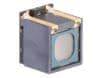
ams OSRAM AQAA-20 BELAGO 1.1 Dot Projector
Proprietary infrared dot-pattern illuminator for stereoscopic imaging & structured light platforms.

ams OSRAM Mga TMF8820, TMF8821 at TMF8828 Multizone ToF Sensor
Ang dToF device ay batay sa SPAD, TDC, at histogram technology at naa-achieve ang 5000mm na detection range.

ams OSRAM AS7343 14-Channel Multi-Spectral Sensor
Integrates optical filters onto standard CMOS silicon via deposited interference filter technology.
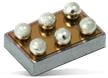
ams OSRAM AS5510 Linear Hall Sensors
Features 10-bit resolution and a simple configuration over an I2C interface, easy to use.

ams OSRAM OSTAR® Stage LEDs
Offering flatter profile of 1.23mm, w/ flat glass cover for compact spotlights.

ams OSRAM TOPLED™ SFH 4243B & SFH 4253B LEDs
Robust, high-quality, surface-mount devices for general-purpose applications.

ams OSRAM SFH 4259B Power TOPLED™ Lens
Offers superior 88mW/sr radiant intensity employing IR:6 thin-film chip technology for IREDs.

ams OSRAM SFH 4258B Power TOPLED™ Lens
Offers exceptional 202mW/sr radiant intensity employing IR:6 thin-film chip technology for IREDs.
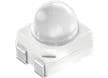
ams OSRAM SFH 4249B Power TOPLED™ Lens
Offers excellent 83mW/sr radiant intensity utilizing IR:6 thin-film chip technology for IREDs.

ams OSRAM SFH 4248B Power TOPLED™ Lens
Offers exceptional 189mW/sr radiant intensity utilizing IR:6 thin-film chip technology for IREDs.