EV Charging Can Be A Two-Way Street
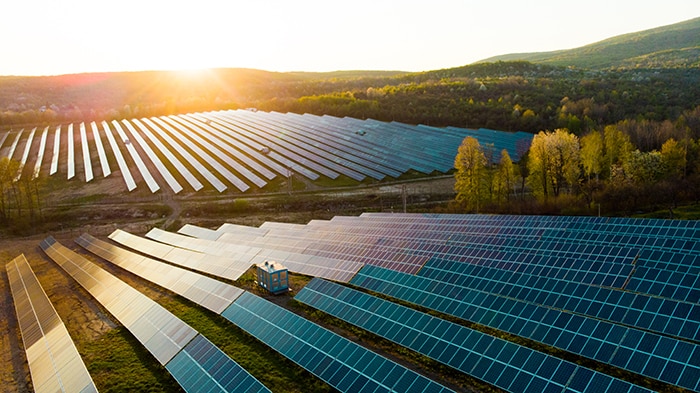
Image Source:
RenataP/Shutterstock.com
By Adam Kimmel for Mouser Electronics
Published November 30, 2021
In 2020, global electric vehicle sales increased by 41%, totaling nearly 3 million vehicles—in a year when
overall vehicle sales sank 6%. All regions contributed to the change: The EU surpassed China as the largest
importer of EVs in 2020, and the US is targeting 50% of new fleet vehicles to be electric by 2030. However,
China still has more EVs on the road than any other geographic area, at 4.5 million cars compared to the EU's
3.2 million. IEA indicated that the 6.8 million global battery electric vehicles (BEVs) on the road today will
grow to 250 million by 2030.
Electrification is here to stay, and demand will reach a light-off point when costs reach parity with traditional
internal combustion engine vehicles (ICEs) later this decade. A coming headwind, opponents are quick to point
out, is that charging is the next factor to limit the proliferation of electric vehicles once the cost is in
line.
How EVs Are Charged Today
Today, most EVs are charged by drawing from existing power sources, many of which are non-renewable (such as grid
power). To maintain carbon-neutral or -negative status and address the severe impact of climate change, the
IPCC's 6th Assessment Report strongly recommends renewable energy sources. If the charging infrastructure were
to move to incorporate renewable energy supplies (solar, wind, biomass, hydroelectric), there are natural
limitations to the availability and reliability of that power. Nevertheless, EVs are a significant avenue toward
decarbonizing the transportation sector. As a result, it will be necessary for the industry to answer questions
like:
- What happens to solar energy at night or during cloudy days?
- What if the wind isn't blowing regularly or hard enough?
- Can the conversion of renewable energy to electrical be fully carbon-free?
It is essential to review the current methods for sourcing the grid’s electricity and what will be needed
to charge EVs to answer these critical questions.
Global Power Sourcing
Power-sourcing of the primary electrical grid varies significantly from region to region. Within a given
geographic area, the proximity energy source can differ as well. The chart in Figure 1 below
offers a high-level view of how the world makes its energy. Some highlights:
- Coal still dominates the global landscape but is dropping
- Gas is second, with an increasing proportion of TWh since 2010, and staying flat
- Renewables are a small but gaining faction, with wind and solar making exponential gains since 2010
- As of 2020, the global share of electricity was:
- 34% coal
- 23% gas
- 19% hydropower and other renewables
- 10% nuclear
- 7% wind
- 4% oil
- 3% solar
Figure 1: Global Electricity Production (Source: Our World in Data)
From the study referenced above, the world is getting about 39% of its electricity from low-carbon sources, which
includes both nuclear and renewables. Renewable energy sources (hydropower, wind, solar, and others) comprise
29% of global energy production and have increased linearly since 2011.
The increasing shift to renewable power will be welcomed and needed, as the global energy demand should continue
to rise from 80TWh in 2020 to 525 to 860TWh by 2030. Increased population and the movement to electrification
are driving this trend. However, another critical factor for higher electricity demand is increasing pressure to
decrease reliance on fossil fuels—still providing nearly 2/3 of global electricity—in favor of more
climate-friendly renewables.
However, such a dramatic increase in electrification will strain grid capacities and add the challenge of
managing renewable storage while increasing loads at peak charging times. These hurdles create the opportunity
for innovative technologies to alleviate the impact of surging demand on charging infrastructure. One such
innovation reverses the direction of electricity between grid and EV: Vehicle-to-grid (V2G).
What is V2G?
Vehicle-to-grid, or V2G, is like having easily portable energy storage units, decentralizing it from power
stations. Like edge computing, using the electricity carried in every EV on the road can help flex power back to
the grid when needed while leveraging off-grid charging capability. V2G opens a two-way energy transfer between
grid and vehicle. V2G works on the premise that many consumers only use a fraction of their battery capacity;
this approach optimizes battery utilization to get more out of the same components.
V2G optimizes the way society produces, uses, and transports electricity. Vehicle batteries would network with a
remote energy storage solution to increase electricity supply during peak demand and optimize when the vehicles
charge (at night, during low demand). In addition, V2G has vehicle owners more actively managing their energy
usage by providing data about their energy usage habits to encourage them to optimize behaviors to lower their
costs. It also opens an income stream for consumers through the ability to sell their electricity back to the
grid. Reducing the total cost of ownership of EVs is one of the fundamental market drivers to increase global
adoption.
Furthermore, having V2G electricity data for when vehicles are using and producing electricity also aids the
utilities in optimizing their energy production, given trends in demand and consumer behavior. This benefit will
help costs for both energy providers and consumers.
A societal benefit is that V2G provides access to remote energy storage in locations that did not have this
previously. Storing, regulating, and providing on-demand power to either grid or vehicle are some of the most
disruptive benefits of integrating the vehicle's electric use to the grid.
Solar Green EVs and Charging Infrastructure
Green EV charging uses solar panels that allow photons to excite electrons, creating an electrical current
flowing into the vehicle and filling the battery's charge capacity. The infrastructure to give charge back to
the grid or to power homes is the user's EV home charger. The same electrical pathways that connect to the grid
to move energy to the battery are used to collect excess energy from the battery and provide it to the
grid—at fair market or negotiated prices. Demand and energy availability will dictate which direction the
energy is going—to or from the electrical grid. This structure provides an on-demand energy provision
while saving excess energy for later use.
Integrating intermittent solar power with battery storage is a natural way to smooth the electricity supply
capacity for on-demand use. Once the battery is fully charged, the energy can be used how and wherever
needed—be it in-vehicle or at home. V2G solves the storage challenge for renewable energy, one of the main
remaining challenges to the increased application of renewable energy.
Remaining Challenges and Barriers to Adoption
One way that electric power is beneficial is through efficiency. It takes the battery's chemical energy and
converts it directly to electrical energy, removing the 30% efficiency loss when moving through a thermal-energy
intermediate that emits waste carbon. While a beneficial solution to mitigate the variability of renewable
energy and grid power strain with skyrocketing demand for electricity, V2G still has some remaining challenges
to overcome in advance of widescale adoption.
There is a development opportunity for DC charges that can integrate with the vehicle, along with the need to
have appropriately-sized converters to move from AC to DC power for energy transfer. While existing AC to DC
converters offers efficiencies of up to 95%, many products still only provide efficiencies in the 80-90% range.
Therefore, it is essential to have power converters tailored to the battery size in EVs and working to increase
conversion efficiency directly increases the electrical output.
Conclusion and Main Takeaway
EVs powered by renewables will play a huge role in managing renewable grid regulations through V2G. This approach
leverages the availability of green solar power to fill up an EV battery's capacity and transfer it to and from
the electrical grid. V2G provides a flexible energy storage option, addressing a significant barrier to
renewable energy. This technology ties energy availability to consumer demand, actively enrolling the user and
providing the most efficient and cost-effective approach for both energy providers and consumers.
Author Bio
 Adam Kimmel has
nearly
20 years as a practicing engineer, R&D manager, and engineering content writer. He creates white papers, website
copy, case studies, and blog posts in vertical markets including automotive, industrial/manufacturing,
technology,
and electronics. Adam has degrees in Chemical and Mechanical Engineering and is the founder and Principal at ASK
Consulting Solutions, LLC, an engineering and technology content writing firm.
Adam Kimmel has
nearly
20 years as a practicing engineer, R&D manager, and engineering content writer. He creates white papers, website
copy, case studies, and blog posts in vertical markets including automotive, industrial/manufacturing,
technology,
and electronics. Adam has degrees in Chemical and Mechanical Engineering and is the founder and Principal at ASK
Consulting Solutions, LLC, an engineering and technology content writing firm.
 Philippines