




Espressif Systems ESP32C3 Ultra-Low Power SoCs
Espressif Systems ESP32C3 Ultra-Low Power SoCs are an ultra-low-power and highly-integrated MCU-based SoC solution that supports 2.4GHz Wi-Fi® and BLUETOOTH® Low Energy (Bluetooth LE). The ESP32C3 contains a complete Wi-Fi subsystem that complies with IEEE 802.11b/g/n protocol and supports Station mode, SoftAP mode, SoftAP + Station mode, and promiscuous mode. The Bluetooth LE subsystem supports features of Bluetooth 5 and Bluetooth mesh.
The Espressif ESP32C3 Ultra-Low Power SoCs offer state-of-the-art power and RF performance with a 32-bit RISC-V single-core processor with a four-stage pipeline that operates at up to 160MHz. The device features 400KB of SRAM (16KB for cache) and 384KB of ROM on the chip, and SPI, Dual SPI, Quad SPI, and QPI interfaces that allow connection to external flash.
The ESP32C3 Ultra-Low Power SoCs deliver reliable security features ensured by cryptographic hardware accelerators that support AES-128/256, Hash, RSA, HMAC, digital signature, and secure boot. These security features are further enabled by a random number generator, permission control on accessing internal memory, external memory, and peripherals, and external memory encryption and decryption.
A rich set of peripheral interfaces and GPIOs, make the ESP32C3 ideal for various scenarios and complex applications.
Features
- Wi-Fi®
- IEEE 802.11 b/g/n-compliant
- Supports 20MHz, 40MHz bandwidth in 2.4GHz band
- 1T1R mode with data rate up to 150Mbps
- Wi-Fi Multimedia (WMM)
- TX/RX A-MPDU, TX/RX A-MSDU
- Immediate Block ACK
- Fragmentation and defragmentation
- Transmit opportunity (TXOP)
- Automatic Beacon monitoring (hardware TSF)
- 4 × virtual Wi-Fi interfaces
- Simultaneous support for Infrastructure BSS in Station mode, SoftAP mode, Station + SoftAP mode, and promiscuous mode
- Antenna diversity
- 802.11mc FTM
- BLUETOOTH®
- Bluetooth LE: Bluetooth 5, Bluetooth mesh
- Speed of 125Kbps, 500Kbps, 1Mbps, or 2Mbps
- Advertising extensions
- Multiple advertisement sets
- Channel selection algorithm #2
- CPU & Memory
- 32-bit RISC-V single-core processor, up to 160MHz
- 384KB ROM
- 400KB SRAM (16KB for cache)
- 8KB SRAM in RTC
- Embedded flash
- SHA Accelerator (FIPS PUB 180-4)
- RSA Accelerator
- Random Number Generator (RNG)
- SPI, Dual SPI, Quad SPI, and QPI interfaces that allow connection to multiple external flash
- Advanced Peripheral Interfaces
- 22 × programmable GPIOs
- Digital interfaces:
- 3 × SPI
- 2 × UART
- 1 × I2C
- 1 x I2S
- Remote control peripheral with 2 transmit channels and 2 receive channels
- LED PWM controller with up to 6 channels
- Full speed USB Serial/JTAG controller
- General DMA controller (GDMA) with 3 transmit channels and 3 receive channels
- 1 x TWAI controller (compatible with ISO 11898-1)
- Analog interfaces
- 2 x 12-bit SAR ADCs up to 6 channels
- 1 x temperature sensor
- Timers
- 2 x 54-bit general purpose timer
- 3 x watchdog timers
- Low Power Management
- Power Management Unit with five power modes
- Security
- Secure boot
- Flash encryption
- 4096-bit OTP, up to 1792 bits for users
- Cryptographic hardware acceleration:
- AES-128/256 (FIPS PUB 197)
- Permission Control
- HMAC
- Digital signature
Applications
- Smart home
- Light control
- Smart button
- Smart plug
- Indoor positioning
- Industrial automation
- Industrial robot
- Mesh network
- Human Machine Interface (HMI)
- Industrial field bus
- Health care
- Health monitor
- Baby monitor
- Consumer electronics
- Smart watch and bracelet
- Over-the-top (OTT) devices
- Wi-Fi® & BLUETOOTH® speaker
- Logger toys and proximity sensing toys
- Smart agriculture
- Smart greenhouse
- Smart irrigation
- Agriculture robot
- Retail and catering
- POS machines
- Service robot
- Audio device
- Internet music players
- Live streaming devices
- Internet radio players
- Generic low-power IoT sensor hubs
- Generic low-power IoT data loggers
Associated Dev Kits

M5Stack M5Stamp C3 5-Piece Set
Features an ESP32-C3 MCU with Wi-Fi and BLE connectivity for IoT edge devices.

DFRobot ESP32-C3-MINI-1-N4 Module with PCB Antenna
Equipped with ESP32-C3FN4 chip and 4MB embedded Flash, belonging to esp32-C3 series chip.

DFRobot ESP32-C3-WROOM-02-N4 Module with PCB Antenna
Equipped with ESP32-C3* chip and 4MB embedded Flash, belonging to esp32-C3 series chip.

Espressif Systems ESP32-C3-DevKitM-1 Development Board
Entry-level evaluation board based on the ESP32-C3-MINI-1 Wi-Fi® / BLUETOOTH® LE Module.

Espressif Systems ESP32-C3-DevKitC-02 Development Boards
Entry-level evaluation board based on the ESP32-C3-WROOM-02 Wi-Fi® / BLUETOOTH® LE Module.

Espressif Systems ESP32-C3-AWS-ExpressLink Module & Dev Board
An AWS IoT ExpressLink Solution to build connected devices powered by AWS IoT quickly.

Espressif Systems ESP32-C3-DevKit-RUST-1 Board
Based on the ESP32-C3, a single-core Wi-Fi® and BLUETOOTH® 5 (LE) microcontroller SoC.
Associated Products

Espressif Systems ESP32-C3-MINI-1x Wi-Fi®/BLE Modules
Compact turnkey wireless connectivity solution, based on the ESP32-C3 SoC.
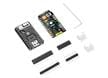
M5Stack M5Stamp C3 Mate with Pin Headers
Features an ESP32-C3 RISC-V MCU with Wi-Fi & BLUETOOTH® 5 connectivity for IoT edge devices.
Block Diagram
