




Texas Instruments CC2564C Dual-Mode BLUETOOTH® Controller
Texas Instruments CC2564C Dual-Mode BLUETOOTH® Controller is a complete Bluetooth BR, EDR, and low energy HCI solution that reduces design effort and enables fast time to market. Based on TI's seventh-generation Bluetooth core, the CC2564C device provides a product-proven solution that is Bluetooth 4.2 compliant. When coupled with a microcontroller unit (MCU), this HCI device offers best-in-class RF performance with about twice the range of other Bluetooth low-energy solutions. Furthermore, TI's power management hardware and software algorithms provide significant power savings in all commonly used Bluetooth BR, EDR, and low energy modes of operation. The TI dual-mode Bluetooth stack software is certified and provided royalty free for MCUs and MPUs. The iPod® (MFi) protocol is supported by add-on software packages.
Features
- TI's single-chip Bluetooth® solution with Bluetooth Basic Rate (BR), Enhanced Data Rate (EDR), and Low Energy (LE) support
- Bluetooth 4.2 component qualified (Declaration ID: D032801); compliant up to the HCI Layer
- Highly optimized for size-constrained and low-cost designs
- Single-ended 50Ω RF interface
- Package footprint: 76 terminals, 0.6mm pitch, 8mm × 8mm (VQFNP-MR)
- BR and EDR features include
- Up to seven active devices
- Scatternet: Up to three piconets simultaneously, one as master and two as slaves
- Up to two Synchronous Connection-Oriented (SCO) links on the same piconet
- Support for all voice air-coding—Continuously Variable Slope Delta (CVSD), A-Law, µ-Law, Modified Subband Coding (mSBC), and transparent (Uncoded)
- Provide an assisted mode for HFP 1.6 Wideband Speech (WBS) profile or A2DP profile to reduce host processing and power
- Support of multiple Bluetooth profiles with enhanced QoS
- Low energy features include
- Multiple sniff instances tightly coupled to achieve minimum power consumption
- Independent buffering for low energy allows large numbers of multiple connections without affecting BR or EDR performance
- Built-in coexistence and prioritization handling for BR, EDR, and low energy
- Capabilities of link-layer topology scatternet—can act concurrently as peripheral and central
- Network support for up to ten devices
- Timeline optimization algorithms to achieve maximum channel utilization
- Best-in-class Bluetooth (RF) performance (TX power, RX sensitivity, blocking)
- Class 1 TX power up to +12dBm
- Internal temperature detection and compensation to ensure minimal variation in RF performance over temperature, no external calibration required
- Improved Adaptive Frequency Hopping (AFH) algorithm with minimum adaptation time
- Longer range, including twice the range of other low-energy-only solutions
- Advanced power management for extended battery life and ease of design
- On-chip power management, including direct connection to the battery
- Low power consumption for active, standby, and scan Bluetooth modes
- Shutdown and sleep modes to minimize power consumption
- Physical interfaces
- UART interface with support for maximum Bluetooth data rates
- UART transport layer (H4) with a maximum rate of 4Mbps
- Three-wire UART transport layer (H5) with a maximum rate of 4Mbps
- Fully Programmable Digital Pulse-Code Modulation (PCM)–Inter-IC Sound (I2S) Codec interface
- UART interface with support for maximum Bluetooth data rates
- Flexibility for easy stack integration and validation into MCUs and MPUs
- CC256x Bluetooth hardware evaluation tool
- PC-based application to evaluate RF performance of the device and configure service pack
Applications
- Wireless audio solutions
- mPOS
- Medical devices
- Set-top boxes (STBs)
- Wearable devices
- Sensor hub, sensor gateway
- Home and factory automation
Functional Block Diagram

Related Products
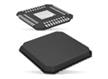
Texas Instruments CC256x Bluetooth 4.0 Controller
Complete Bluetooth 4.0 dual mode BR/EDR/LE HCI solution based on TI’s 7th gen Bluetooth core.

Texas Instruments SimpleLink™ Microcontrollers (MCUs)
Portfolio of differentiated wired and wireless Arm® MCUs with a single development environment.
Inilathala: 2017-01-05
| Na-update: 2022-03-11